How to Use Bluesky Starter Packs to Grow a Better Audience
Starter packs are one of Bluesky's most useful growth features because they solve a hard problem: finding the right people before the algorithm knows what you care about. Instead of starting with a blank feed, a starter pack gives you a curated list of accounts and, in many cases, feeds that define a community.
For creators, founders, writers, and professionals, starter packs are not just onboarding tools. Used well, they become discovery engines. They help you understand who shapes a niche, where conversations happen, and which accounts are worth building relationships with.
What a starter pack actually does
A Bluesky starter pack is a curated bundle of accounts, and sometimes feeds, around a topic or community. Bluesky introduced starter packs as personalized invites that help people bring friends into a specific slice of the network. That framing matters: a good starter pack is not a random list. It is a map of a community.
That makes starter packs useful in three ways:
- Discovery: You can quickly find active people in a topic.
- Context: You can see what a community values by who gets included.
- Trust: A pack created by a respected account gives you a stronger starting point than search alone.
If you are trying to grow on Bluesky, starter packs help you avoid broad, unfocused following. You can build around relevance first.
Start by joining the right packs
Before creating your own starter pack, spend time joining and studying existing ones. Search for packs in your niche, look at who created them, and check whether the recommended accounts are still active.
Use this quick filter:
- Are the accounts posting recently?
- Do they get replies, not just likes?
- Is the pack focused enough to describe in one sentence?
- Does the creator have credibility in the topic?
- Would you want this pack to define your first impression of the community?
A small, focused pack is usually more useful than a huge generic one. "Climate scientists on Bluesky" is easier to act on than "Interesting people."
Follow in batches, then engage deliberately
The mistake most people make is following every account in a starter pack and then doing nothing. That creates a crowded feed without creating relationships.
Instead, follow in small batches. Pick 10 to 20 accounts from a pack, spend a week reading their posts, and reply when you have something specific to add. Look for recurring formats, common questions, and the people who consistently start useful conversations.
Growth comes from becoming recognizable inside a niche. Starter packs help you find the room, but replies and original posts are how people remember you.
Create a starter pack when you have a real point of view
You do not need a massive audience to create a useful starter pack. You need a clear editorial standard. The best packs answer a specific question:
- Who should a beginner follow to understand this topic?
- Which accounts consistently share useful work?
- Who makes this community more thoughtful, informed, or welcoming?
- Which feeds help someone keep up without drowning in noise?
If your pack has a point of view, people will share it. If it is just a list of friends, it will be harder for new users to understand why it matters.
Keep the pack focused
Starter packs work best when they are narrow enough to be useful. If you cover product design, do not mix UX researchers, visual designers, startup founders, AI builders, and general tech commentators into one giant list unless the theme is clearly "product design ecosystem."
Better starter pack ideas:
- "Indie app builders shipping in public"
- "Bluesky accounts for public health researchers"
- "Climate policy analysts and journalists"
- "Writers sharing craft, publishing, and essays"
- "Finance accounts for macro and market structure"
Specificity improves trust. It also helps your pack show up in conversations where people are asking for exactly that resource.
Write a useful description
Your starter pack description should make the promise clear. Avoid vague copy like "Great people to follow." Tell people who the pack is for and what they will get from it.
A good description includes:
- The topic
- The intended audience
- The standard for inclusion
- Any update schedule, if relevant
Example: "A starter pack for new Bluesky users interested in practical climate policy. Includes researchers, journalists, analysts, and organizations that post active, evidence-based updates."
That kind of description makes the pack easier to share because it explains itself.
Refresh the pack regularly
A stale starter pack loses value quickly. Accounts change focus, stop posting, or become less relevant. Set a monthly reminder to review your pack.
Remove accounts that are inactive or off-topic. Add new voices that are contributing useful work. If the pack grows too large, consider splitting it into smaller packs by subtopic.
This is especially important if your pack becomes popular. People may treat it as a recommendation from you, so keeping it sharp protects your credibility.
Use starter packs as research, not just promotion
Starter packs can also tell you where opportunity exists. If a topic has many popular starter packs, the community is active but competitive. If a topic has no good starter pack, creating one can make you a useful connector.
Look for gaps:
- A niche with active posts but no clear onboarding resource
- A professional community scattered across several feeds
- A topic where new users often ask who to follow
- A region, language, or industry that is underrepresented
Filling one of these gaps can earn more trust than posting another generic thread about growth.
Combine starter packs with custom feeds
Starter packs and custom feeds work well together. A starter pack helps people find accounts. A custom feed helps people follow the conversation. If your niche has both, recommend both.
For example, a finance starter pack might include analysts, journalists, and market commentators. A matching custom feed might track cashtags, earnings discussions, or macroeconomic news. Together, they help a new user build both a network and a reading workflow.
How FollowBlue fits in
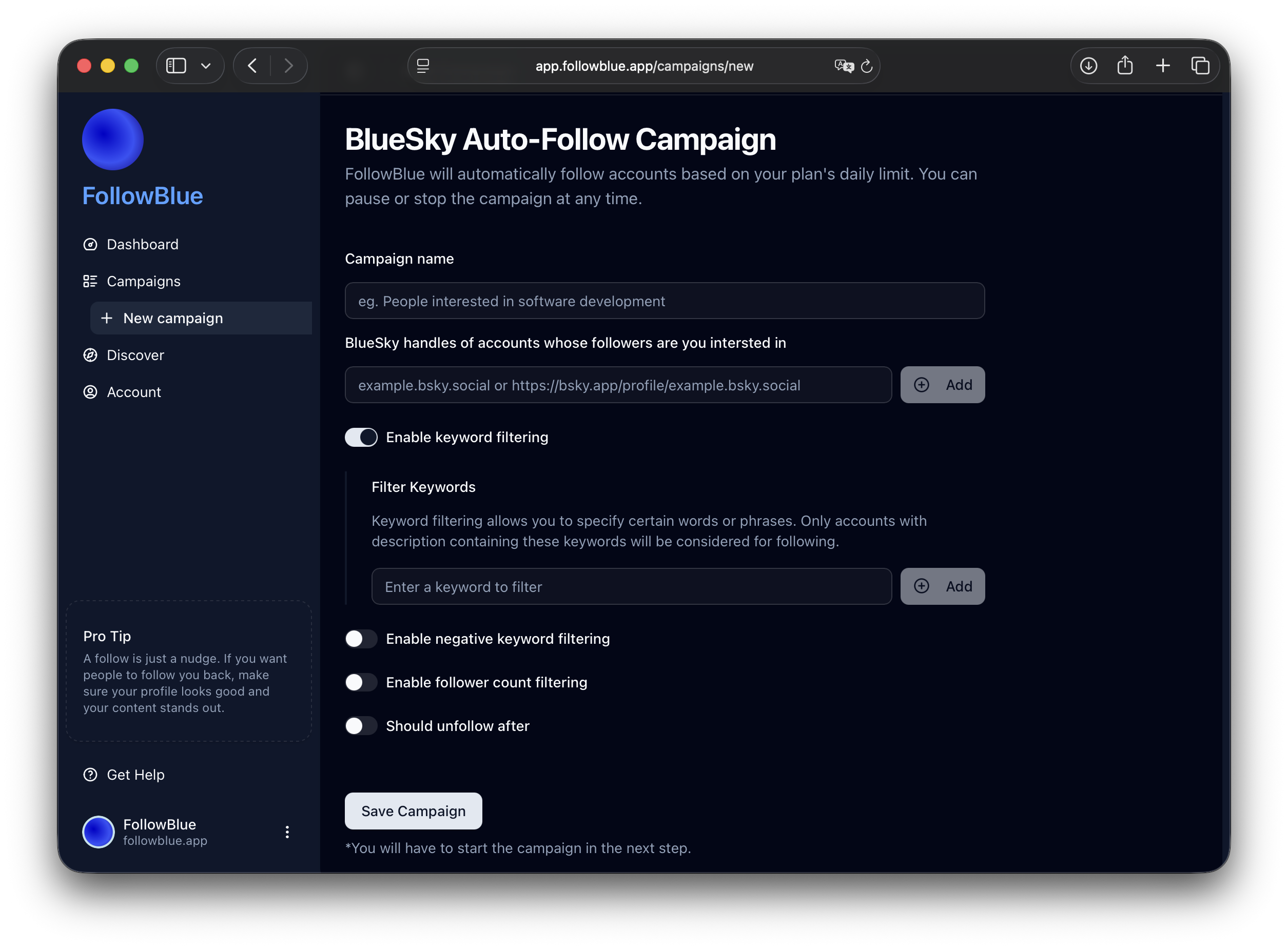
FollowBlue can help you turn starter pack research into a more systematic growth process. Use starter packs to identify the right community, then use FollowBlue to discover related accounts, follow relevant people at a measured pace, and keep your audience-building focused.
The goal is not to follow everyone. The goal is to build a graph of people who are genuinely connected to your topic.
A simple starter pack growth workflow
Try this for two weeks:
- Find three starter packs in your niche.
- Follow 10 to 20 accounts from the strongest pack.
- Reply thoughtfully to five posts per day.
- Save account names that repeatedly create useful conversations.
- Publish two original posts based on questions you see in the community.
- Create or update your own starter pack with a clear editorial standard.
- Share the pack when people ask who to follow.
This workflow keeps growth tied to relevance. You are not chasing attention from everyone. You are becoming useful to the right people.
Final thoughts
Starter packs are one of the cleanest ways to grow on Bluesky because they are built around community, not tricks. The best use of them is simple: find the right rooms, learn the norms, contribute before promoting yourself, and curate resources that make the network easier for others to join.
If you treat starter packs as community infrastructure, they can do more than increase your follower count. They can make you a trusted guide in your niche.
Ready to grow your Bluesky presence?
FollowBlue helps you build a genuine following with smart, automated growth strategies that feel natural.
Get Started Today